
Financial bubbles rarely form because a technology turns out to be a hoax. They form because investors become convinced that extraordinary success will continue indefinitely.
Railroads changed America. The railroad bubble still burst. The internet changed the world. The dot-com bubble still burst.
Artificial intelligence may prove to be one of the most transformative technologies in history. But history also suggests that revolutionary technologies and investment bubbles have a habit of arriving together.
Here are ten signs that today's market is starting to resemble the later stages of previous technology booms.
1. AI Models are becoming commoditized
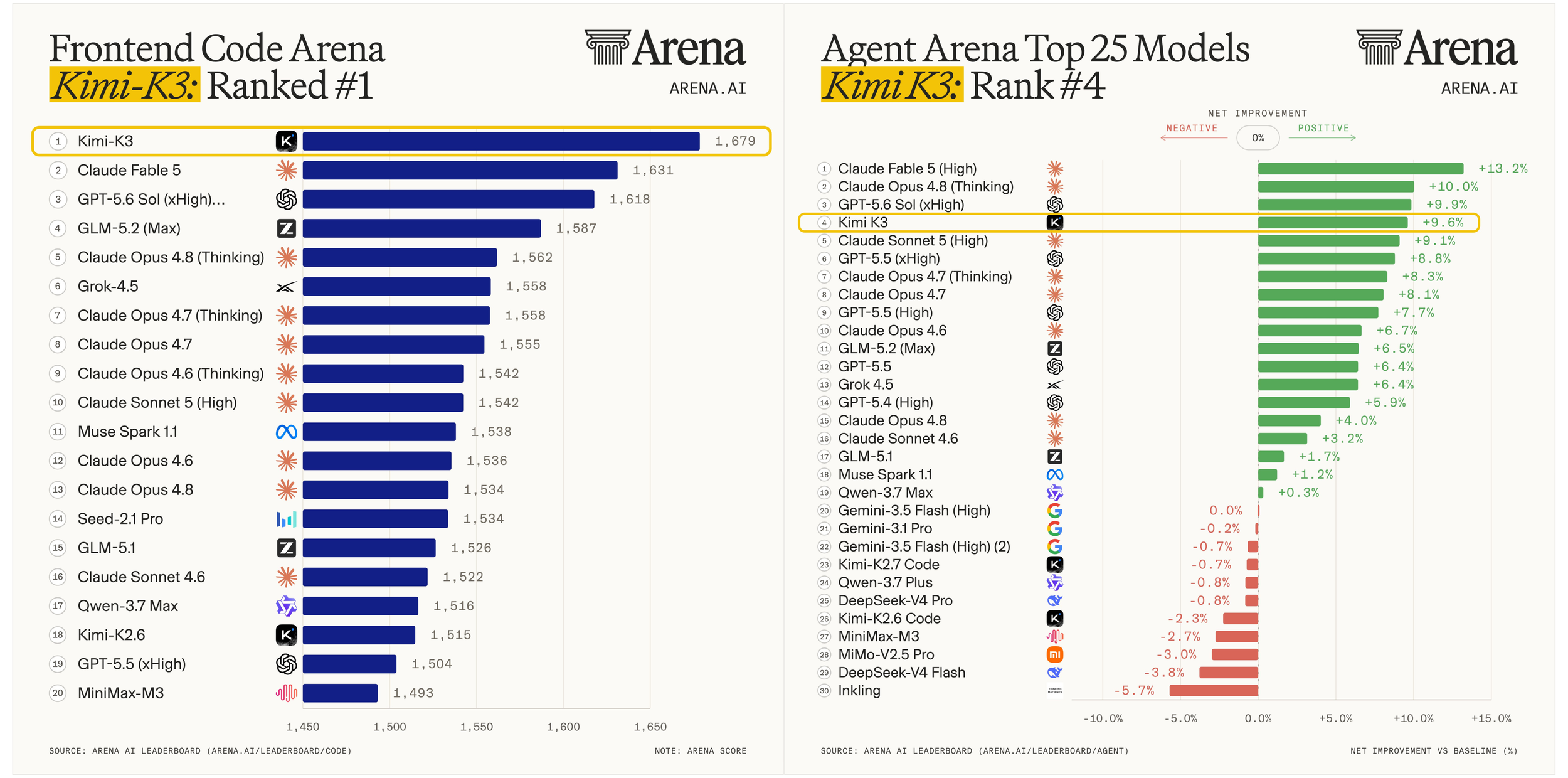
Just two years ago, frontier AI models were dominated by a handful of U.S. companies. Today, open-source and international competitors are closing the gap fast. China's Moonshot AI recently released Kimi K3, an open-source model that reportedly rivals leading proprietary systems at a fraction of the cost.
As models become more widely available, competitive advantage is likely to shift away from the models (hyperscalers) and towards proprietary data, customer relationships, and enterprise workflows. If AI commoditizes faster than expected, today's premium tech valuations could be difficult to justify.
Further reading:VentureBeat — China's Moonshot AI Releases Kimi K3
2. AI Infrastructure spending has become a Gold rush
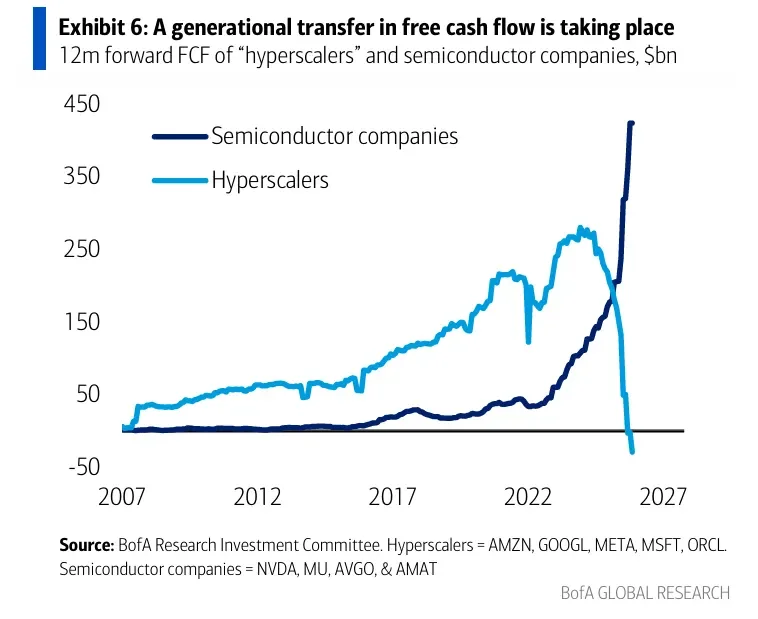
Hundreds of billions of dollars are flowing into GPUs, data centers, networking equipment, and power infrastructure. Every major technology revolution — from railroads to fiber optics — has gone through a phase where capital spending raced well ahead of eventual returns.
The question is no longer whether AI is transformative. It's whether today's unprecedented investment will ultimately earn an attractive return on capital for the hypersccalers.
3. IPO Mania is in peak bloom
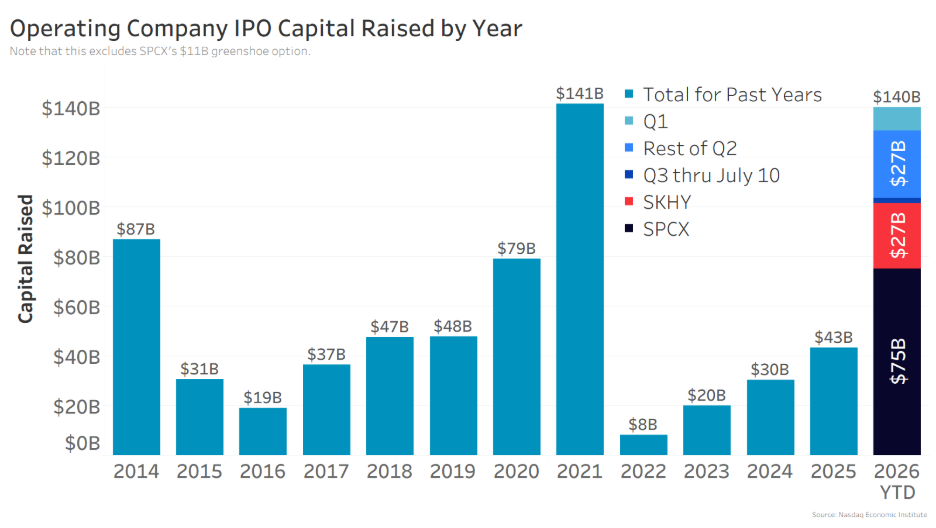
Late-stage bull markets often coincide with renewed enthusiasm for IPOs, as investors become increasingly willing to pay extraordinary prices for exciting stories, betting that future growth will justify today's valuations.
Recent excitement around companies like SpaceX reflects that optimism. SpaceX has already traded roughly 40% below its peak price — a reminder that chasing IPOs can be detrimental to your financial health.
At the same time, U.S. corporate insiders sold $77.6 billion of stock in the first half of 2026 — an 11-to-1 ratio of selling to buying and the fastest insider-selling pace in roughly two decades outside of 2021. Heavy issuance combined with heavy insider selling is a pattern worth watching: it suggests that even as public enthusiasm builds, the people closest to these businesses are increasingly comfortable taking chips off the table.
Further reading:Nasdaq — 2026 IPO Market Trends
4. Market leadership has become exceptionally narrow
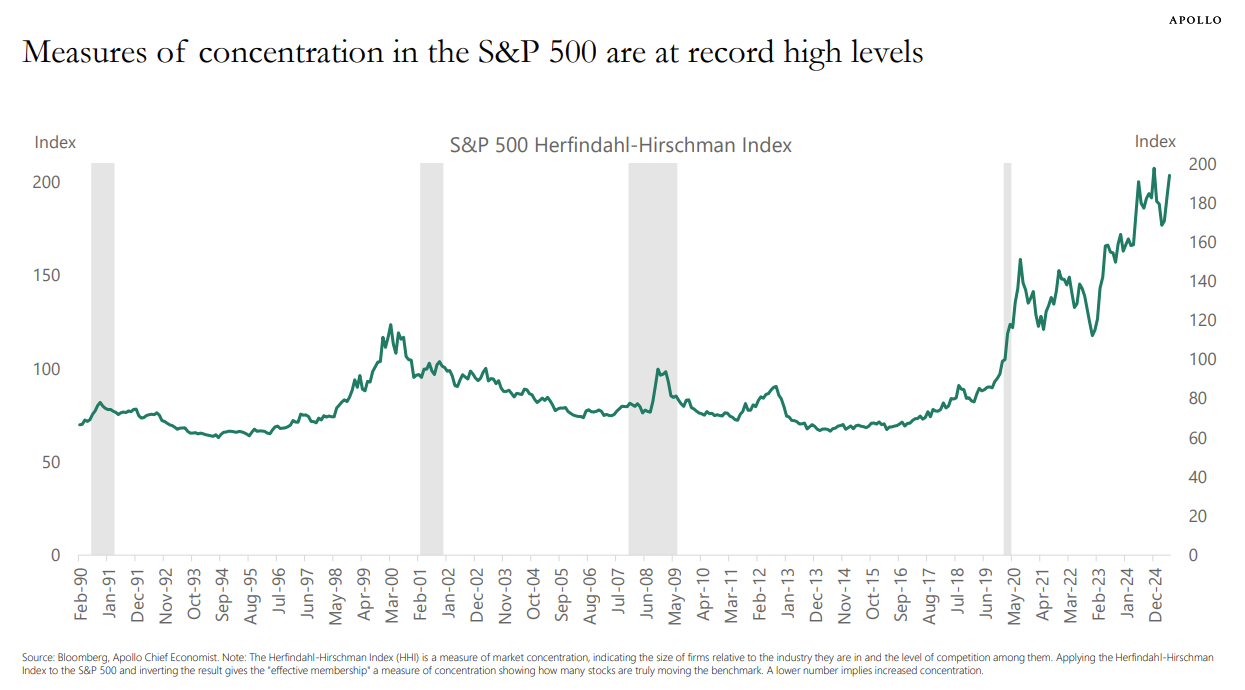
Healthy bull markets tend to broaden over time. Today's market has instead become increasingly concentrated, with roughly 40% of the S&P 500's market capitalization represented by just ten companies, led primarily by AI and semiconductor stocks.
When that much of the market rides on a handful of names, even a modest shift in sentiment can have an outsized impact.
5. Equity Valuations matter
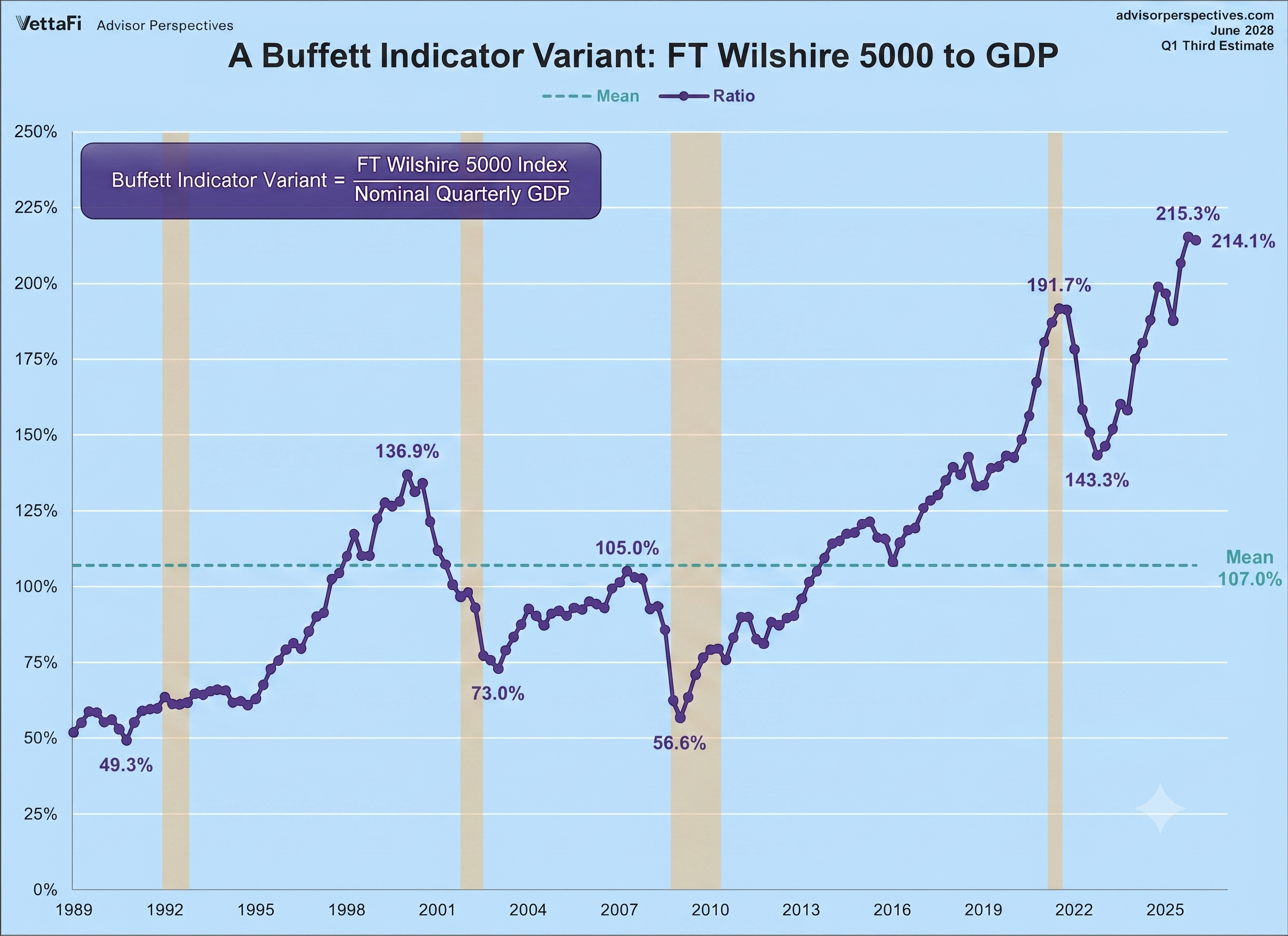
What you pay matters, especially for new investors. The Buffett Indicator, which compares total U.S. stock market value to GDP, remains near historically elevated levels — well above its long-term trendline. While valuation says little about next month's returns, history suggests it's been one of the strongest predictors of long-term investment performance.
High expectations leave little room for disappointment.
6. Retail Leverage at records
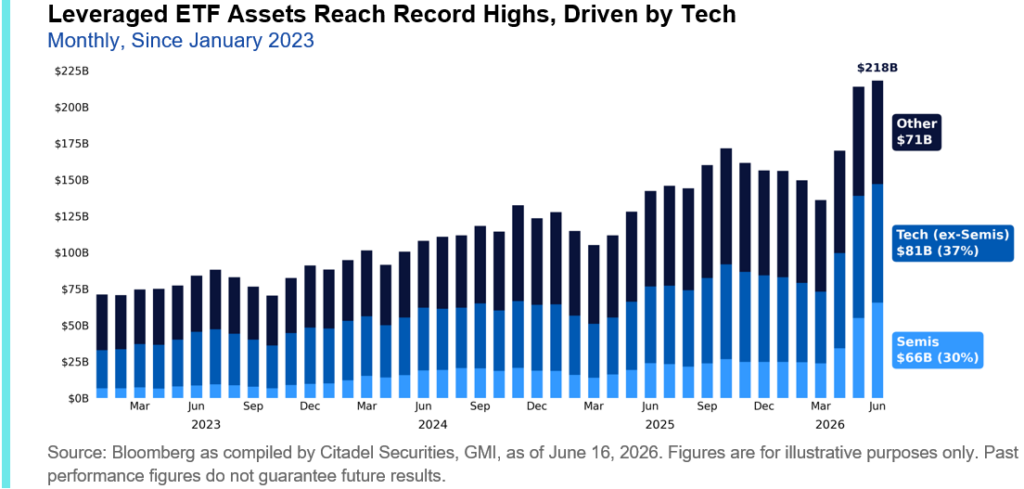
Every market cycle finds a new way to increase leverage. This cycle features the rapid growth of single-stock leveraged ETFs, options trading, and retail participation. Regulators in South Korea have already halted new leveraged semiconductor ETFs amid concerns that excessive speculation could amplify future market volatility.
When leverage becomes easy, markets often become fragile.
Further reading:Korea JoongAng Daily — South Korea Restricts Leveraged Tech ETFs
7. Margin debt at record high
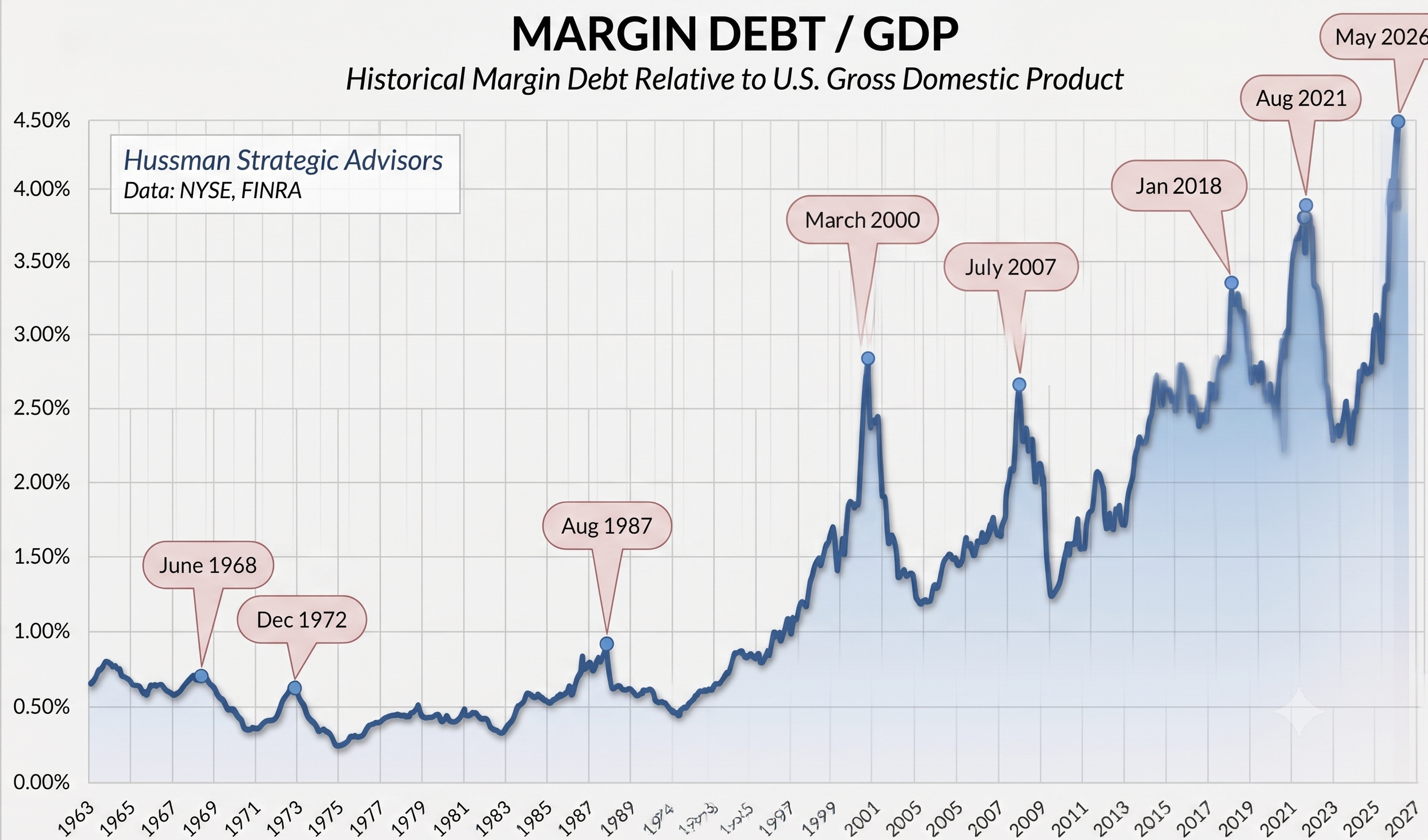
Margin debt often reflects investor confidence. Borrowing to buy stocks amplifies gains during bull markets, but it can also accelerate declines when markets reverse. Rising margin balances don't cause bear markets, but they often make corrections sharper as forced selling feeds on itself.
8. Cracks are appearing in Private Credit
The AI infrastructure boom depends heavily on financing. Meanwhile, private credit defaults have risen, payment-in-kind (PIK) financing has become more common, and redemption pressures have emerged across several private credit funds.
History shows that speculative markets rarely thrive once credit becomes harder to obtain. Rising Government Bond Yields will put addiitional pressure for this less liquid segment of the bond market.
Further reading:Fitch Ratings — U.S. Private Credit Default Rate
9. Geopolitics could reignite inflation
Rising tensions in the Middle East increase the risk of another energy shock. A prolonged war theater increases the oil prices and would raise transportation costs, pressure consumer spending, and make inflation harder to control — reducing the Federal Reserve's flexibility just as markets were pricing in easier monetary policy after the annoucement of ceasfire in June.
Further reading:Brent Tops $100 as Houthi Attacks Push Oil Rally Into Triple Digits
10. The Fed and the US Mid-term election create a challenging backdrop
Markets are entering a period where two major uncertainties overlap. Persistent inflation means the Federal Reserve may need to keep rates elevated, or even tighten further if inflation reaccelerates.
Bank of America Corp. economists are now calling for three interest rate hikes before year's end, a sharp reversal from a forecast just six months ago that anticipated rate cuts through mid-2026.
The Charlotte-based bank's Global Research team issued a "change of call" report June 22 projecting 75 basis points in hikes beginning in September. The forecast follows the Federal Reserve's June meeting under newly installed Chair Kevin Warsh, which held rates steady but stripped the policy statement of any language signaling future cuts.
At the same time, the upcoming U.S. midterm elections introduce addition uncertainty in addition to the shifting tariff regime that we are in.
Further reading:Bank of America expects three rate hikes, reversing outlook
Final Thoughts
None of these signs guarantee that the AI boom is about to end. AI may ultimately prove as transformative as electricity, the internet, or the smartphone. But history teaches an important lesson: technological revolutions and financial bubbles often happen at the same time.
The challenge for investors isn't deciding whether AI will change the world — it almost certainly will. The challenge is determining whether today's market has already priced in tomorrow's success.
Whether we're witnessing the beginning of a new era or the late innings of another technology bubble, only time will tell. But when expectations start to look nearly flawless, it's worth paying as much attention to risk as to opportunity.
As the investor Sir John Templeton put it, bull markets tend to be born in pessimism, grow through skepticism, mature on optimism, and end in euphoria.
